 Stephen Day
CFA members will vote through Nov. 19 as contract negotiations continue, raising concerns about canceled classes, delayed grades and graduation at CSUSB.
Throughout the California State University system, faculty began voting Oct. 26 on whether to authorize a strike as contract negotiations between the California Faculty Association and CSU management remain unresolved. If authorized by the vote, which continues through Nov. 19, union leadership would have the authority to call a work stoppage if negotiations fail.
For students at CSUSB, a faculty strike could mean more than canceled classes. Depending on its timing and duration, a work stoppage could delay final grades, disrupt graduation plans and affect financial aid. While local CFA leadership believes a strike is increasingly likely, CSU officials maintain that an agreement remains possible and say contingency plans are in place to minimize disruptions to students.
"I think a strike is inevitable. I don't think it'll be avoided, because right now they've offered us nothing," said President of CFA’s San Bernardino chapter Tiffany Jones.
According to Jones, no strike vote had been announced as of Oct. 9. Since then, CFA's statewide leadership has opened the strike-authorization vote, bringing the union another step closer to a potential work stoppage.
A successful vote would not automatically trigger a strike. Instead, it would authorize union leadership to call one if the parties fail to reach an agreement after completing the required bargaining process.
Both the CFA and CSU are currently in factfinding, a process in which representatives from both sides present their positions to a panel that can recommend terms for a settlement. Hearings are scheduled for November.
What a strike could mean for students
Jones acknowledged that a faculty strike would likely create significant academic complications, particularly if it occurred near the end of an academic term.
"If it does happen at the end of the term, yeah, grades will probably be withheld," Jones said. "That does have major implications on students. And I think we're fully aware of that."
She said delayed grades could affect graduating seniors, students receiving financial aid and international students whose academic records may be relevant to maintaining their immigration status.
"This is not something that anybody wants. I'd much rather be teaching than standing out on a picket line," Jones said.
In information materials prepared for CSUSB students, CFA-San Bernardino outlined the academic services that faculty would suspend during a strike, including teaching classes, holding office hours, responding to student emails, and submitting grades.
"We want to be honest: a strike would be disruptive to your education and your lives, and we do not take it lightly," the chapter wrote in a letter to students.
A strike occurring earlier in a semester could also affect students seeking academic advising, letters of recommendation or assistance from their professors.
Jones said the timing and duration of any strike would be determined by CFA's statewide leadership, which would weigh several factors, including the impact on students.
She also suggested that a future strike might differ from the union's previous work stoppage, which had a predetermined duration.
"I have heard that there probably won't be an end date this time," Jones said, emphasizing that no decisions about strike timing or duration had been made.
CSU says a strike is not inevitable
In a written response to the Coyote Chronicle, CSU spokesperson Amy Bentley-Smith disputed the suggestion that a work stoppage is unavoidable.
"While differences exist, a strike is not inevitable," Bentley-Smith said. "The CSU remains focused on reaching an agreement, just as we have recently with the Academic Professionals of California, the second largest professional staff bargaining unit in the CSU."
We're not just fighting for us. We're fighting for quality education, right? We're fighting for the students
Bentley-Smith said the university system must balance employee compensation with its responsibility to manage public resources and maintain long-term financial stability.
The CSU also confirmed that campuses maintain plans for potential disruptions to university operations.
"The CSU and its universities maintain contingency plans for all types of potential disruption to campus operations with the goal of preventing or reducing impact to our students' academic progress," Bentley-Smith said.
However, the university did not provide specific details about how delayed grades, graduation requirements or financial aid would be handled during a faculty strike.
"It would be premature to speculate on specific impacts of a labor action, but again, campuses will communicate directly with students about what to expect and where to seek assistance," Bentley-Smith said.
A dispute over faculty pay and classroom resources
Unlike the previous CFA contract negotiations, which focused primarily on salary provisions, the current dispute involves the broader collective bargaining agreement.
CFA is seeking changes to faculty compensation, workload requirements, lecturer appointments, academic freedom and protections related to artificial intelligence.
Jones said the union's demands extend beyond salaries and are connected to what faculty describe as deteriorating classroom conditions.
She cited increasing class sizes, canceled smaller courses, limited support for internships and independent studies, and faculty burnout as problems affecting students.
"We're not just fighting for us. We're fighting for quality education, right? We're fighting for the students," Jones said.
In its student information materials, CFA-San Bernardino argues that faculty working conditions directly affect the quality of students' education. The chapter points to overcrowded classrooms, canceled courses, reduced resources and faculty departures as consequences of what it describes as inadequate investment in instruction.
The materials also criticize executive compensation decisions, alleging that some CSU campus presidents and vice chancellors received raises of up to 20%. CSU has defended its executive compensation policies as part of its efforts to recruit and retain university leadership.
CSU officials have emphasized the financial constraints facing the university system.
According to figures provided by Bentley-Smith, employee salaries and benefits accounted for 74% of CSU's operating budget in the 2025-26 fiscal year, including $4.3 billion for salaries and $2.3 billion for benefits.
She also said CSU faculty received general salary increases totaling 13% in recent bargaining rounds.
The union, however, argues that faculty compensation has failed to keep pace with the cost of living and that CSU's current proposals do not adequately address those losses.
CFA encourages students to become involved
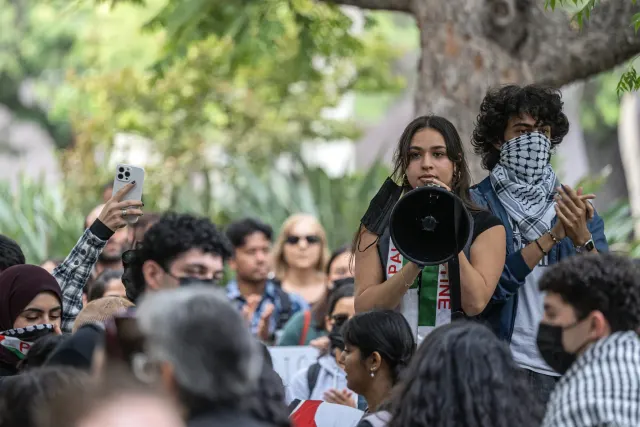
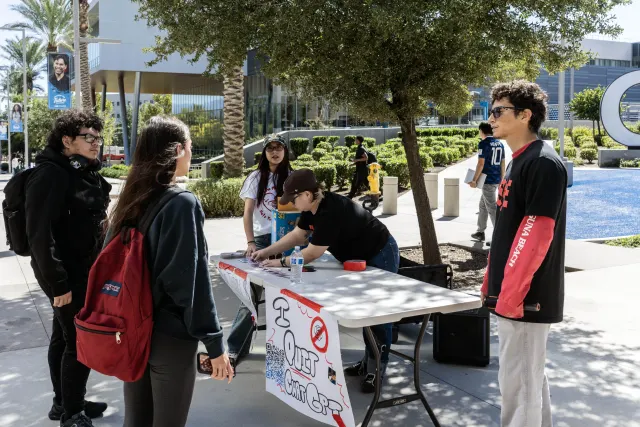
CFA-San Bernardino has begun distributing student information materials explaining the contract dispute and encouraging students to participate in union-organized activities.
The chapter is asking students to sign a solidarity pledge, contact CSU leadership and state legislators, and participate in informational pickets, rallies and other campus actions.
Jones said CFA is also working with Students for Quality Education, a student organization affiliated with the union, to raise awareness about the negotiations and the possibility of a strike.
She urged students to support faculty if a strike occurs, including by refusing to cross picket lines.
"Short-term gain is not worth it for the long term. We want a better education system. We want better quality education," Jones said.
For students whose professors continue holding classes, however, choosing not to attend could present difficult decisions about attendance requirements and academic responsibilities. CSU has not yet provided specific guidance addressing those circumstances.
Jones maintained that faculty do not want students to suffer academic consequences but argued that collective action could ultimately improve the educational environment.
"If they want to avoid a strike, they should start calling the chancellor's office," Jones said.
In its letter to students, CFA-San Bernardino emphasized that the union sees its contract demands as part of a broader effort to improve public higher education.
"You are not collateral in this dispute. You are the reason we do this work, and we will fight for you and keep you informed at every step," the chapter wrote.
What happens next
CFA members have until Nov. 19 to cast their ballots in the strike-authorization vote.
If members approve the authorization, CFA's Board of Directors would have the authority to call a strike after the required bargaining process concludes, should negotiations fail to produce an agreement.
No strike dates have been announced.
In the meantime, CSUSB students should continue attending scheduled classes and monitoring official university communications for any changes to academic operations.
Updates on negotiations are available through the California Faculty Association and the CSU's official labor relations website. Information about local union activities is available through CFA-San Bernardino.